6–10 min
Typical in-press cycle
Industry
Clean hot, protect geometry, cut change-over time
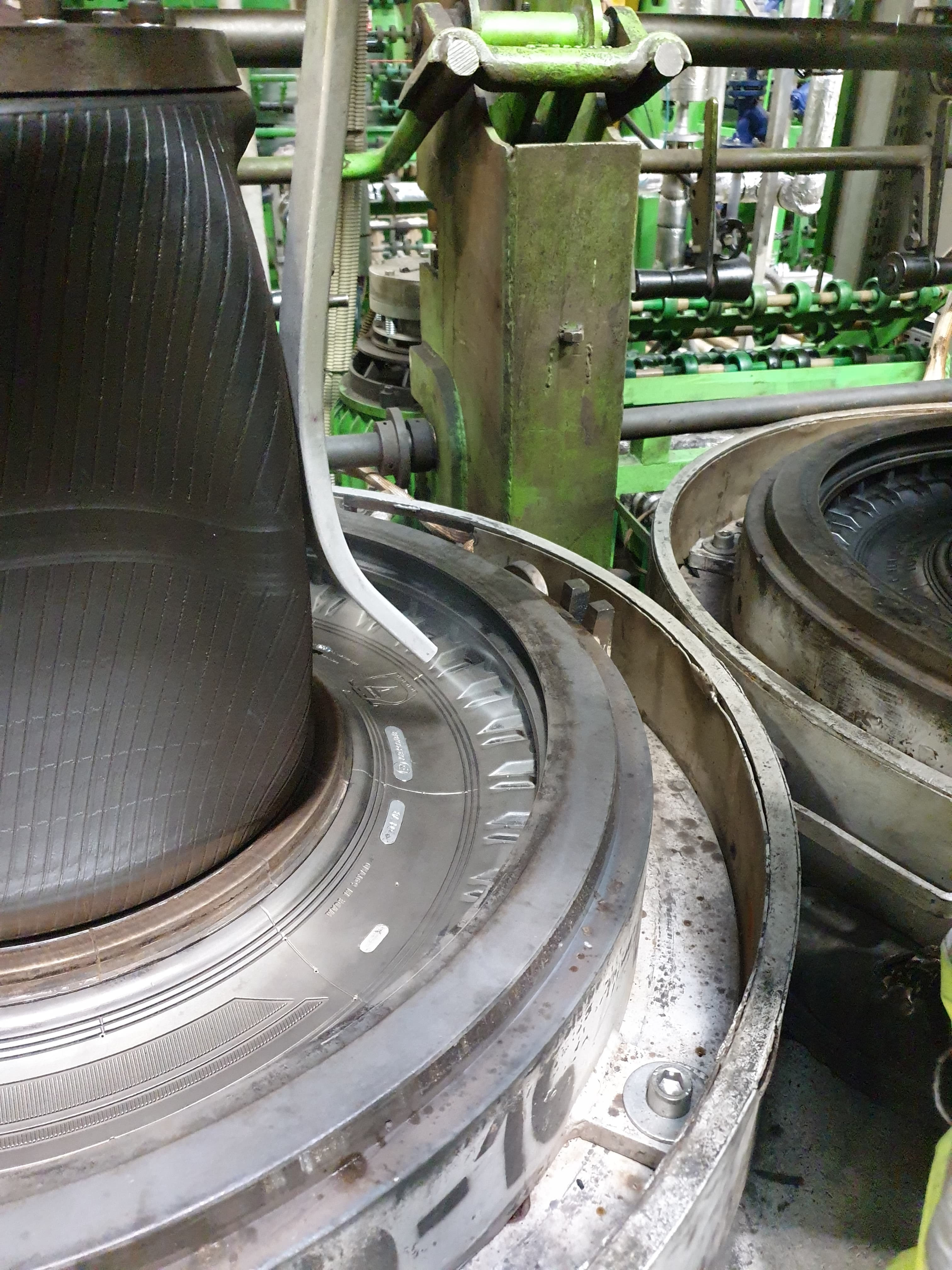
Molds load up with release, plate-out, pigments, and material burn, choking vents and dulling finish. Solvents and bead-blast are slow, messy, and risk rounding edges and ruining polish.
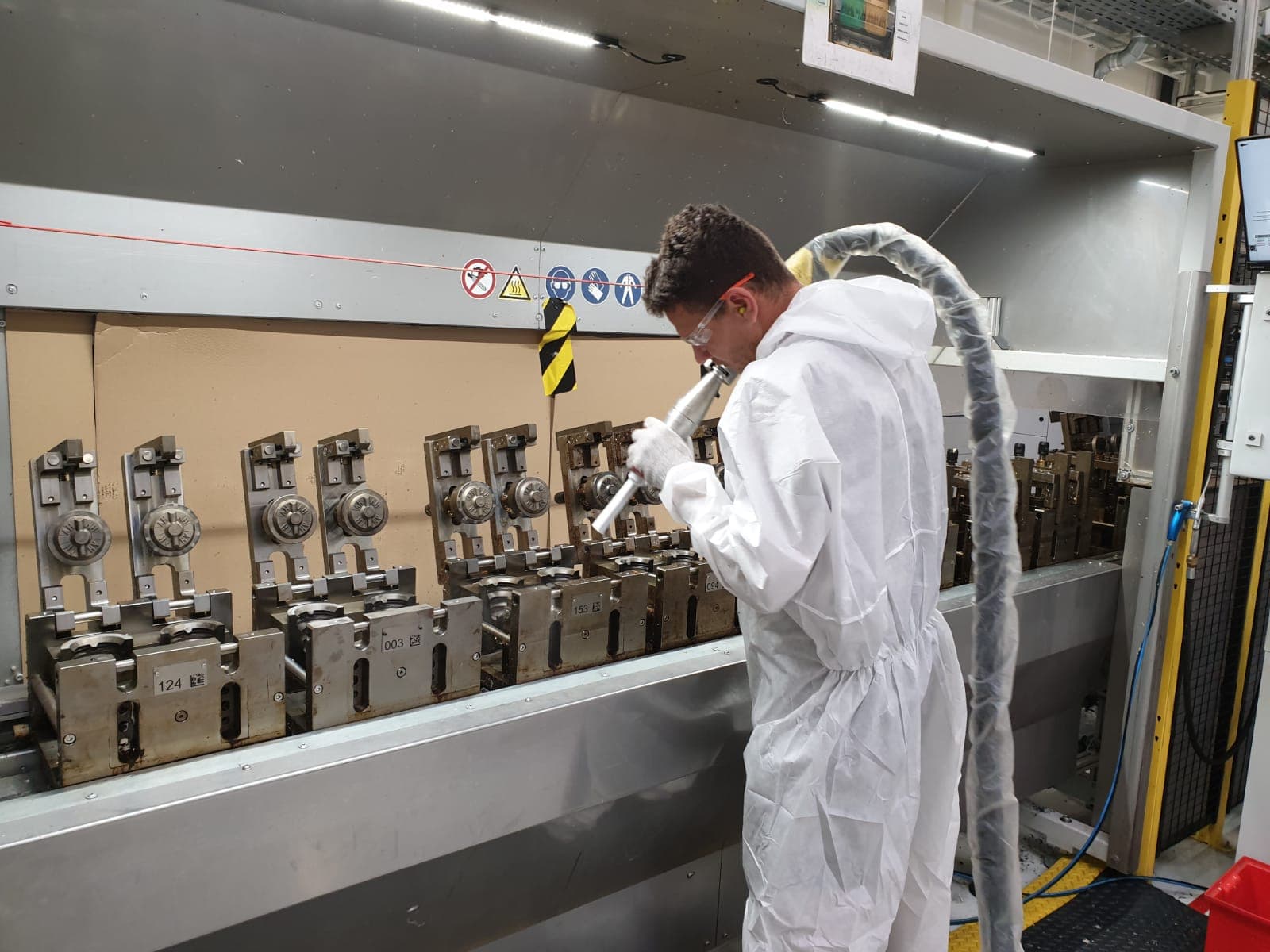
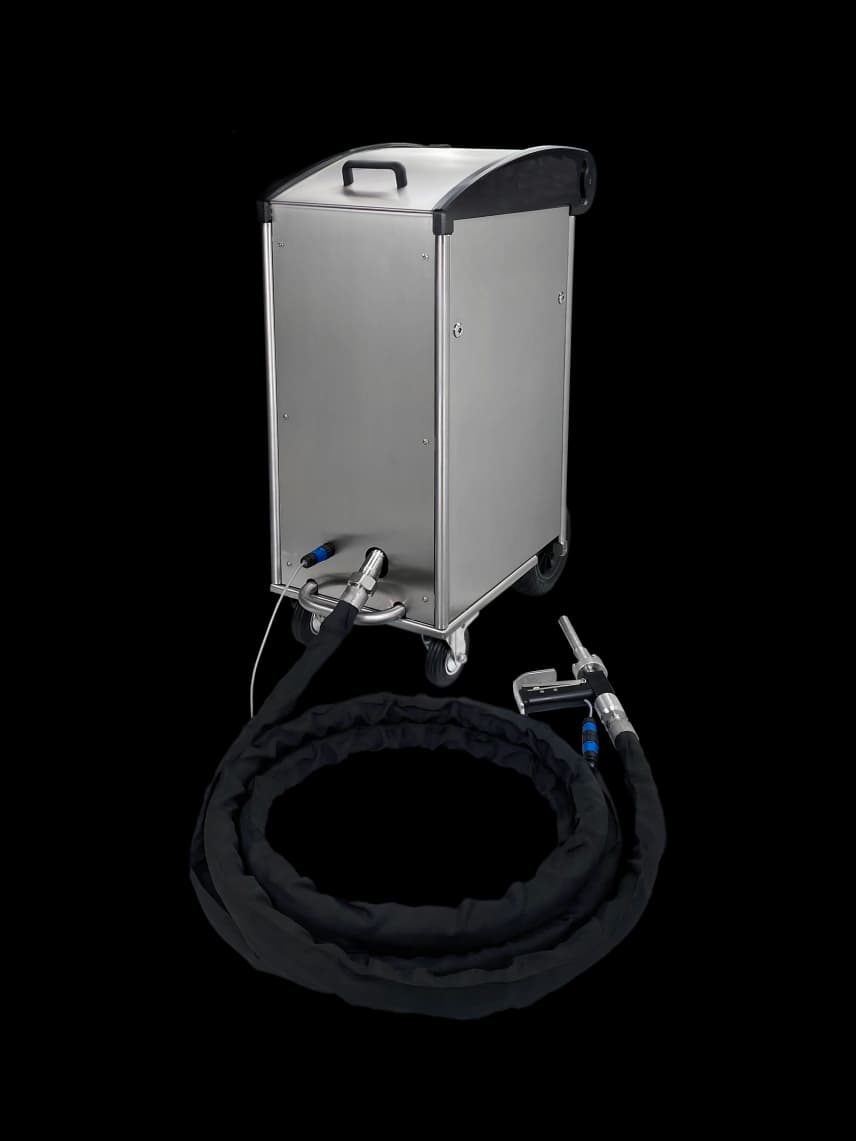
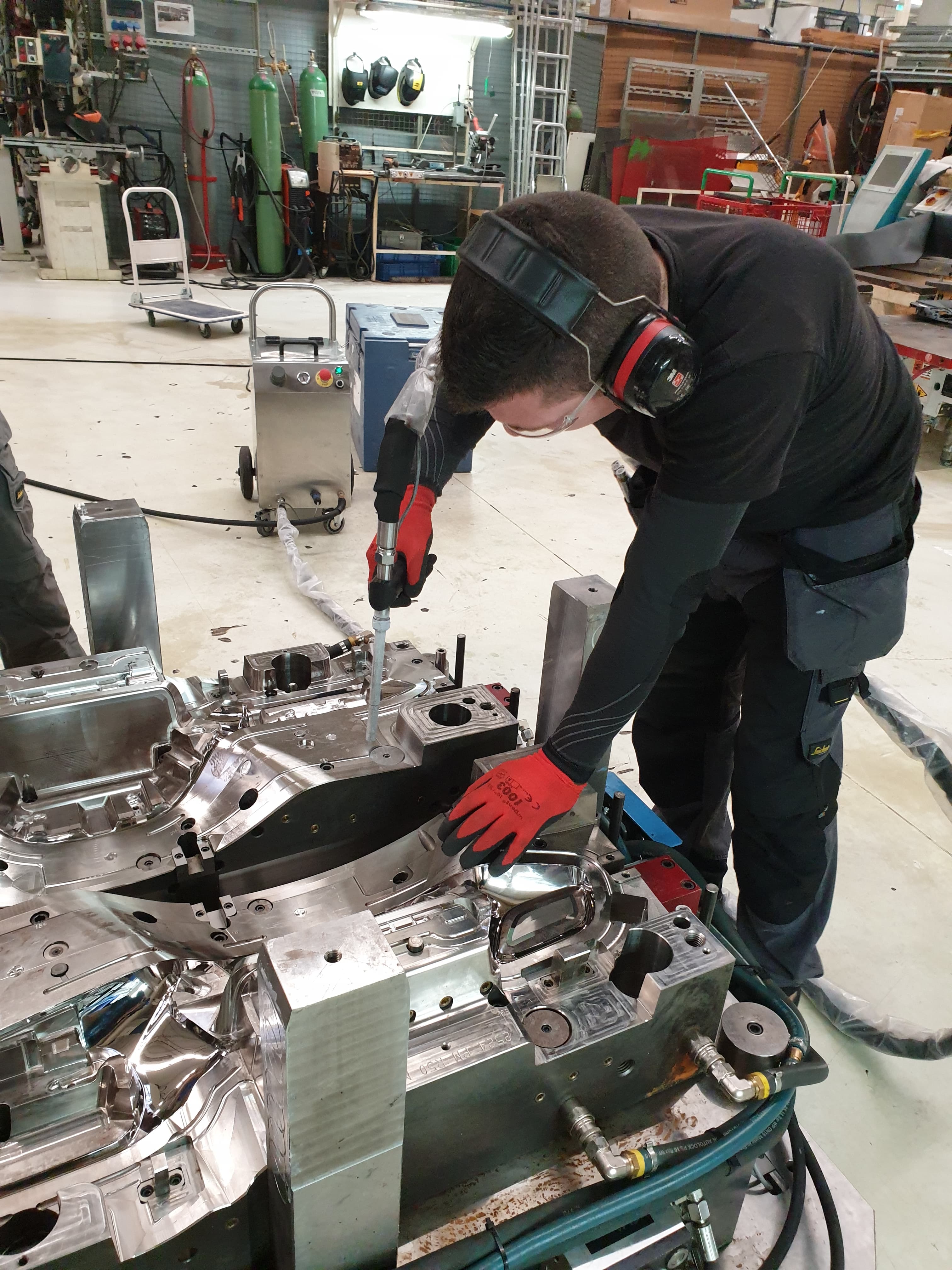
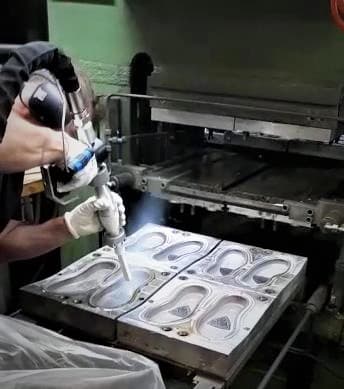
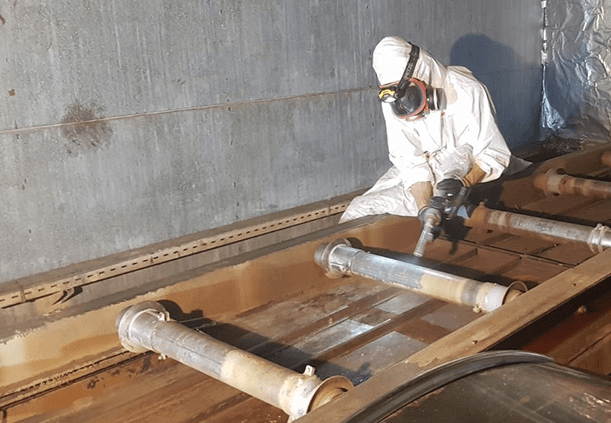
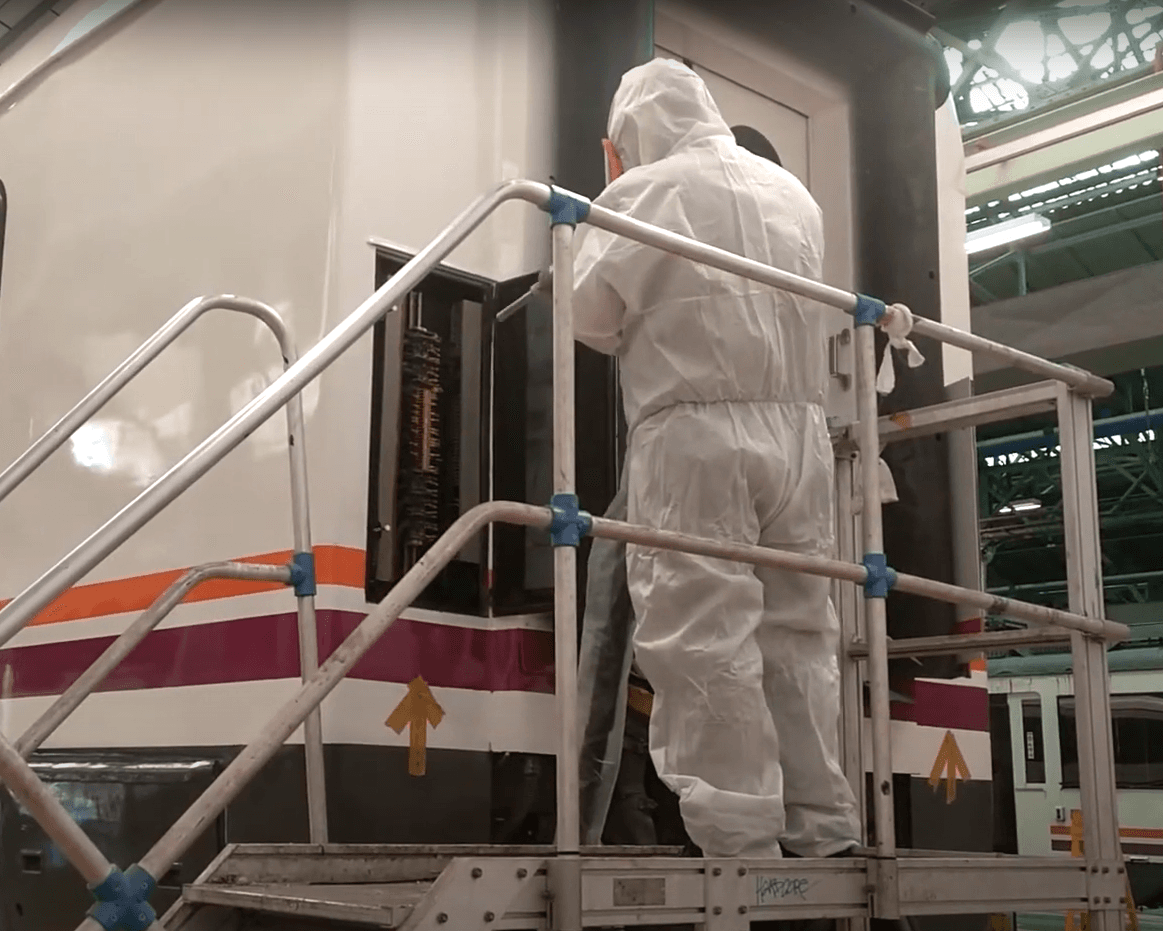
Dry-ice pellets accelerate to high velocity and flash-sublimate on impact. The thermal/acoustic micro-impulse fractures residue and lifts it from steel or aluminum without abrasion, moisture, or conductivity.
Clean in place at temperature, keep geometry intact, restore venting and gloss, and put hours back into production windows—improving OEE, consistency, and safety while eliminating solvent handling.
6–10 min
Typical in-press cycle
0
Secondary media or rinse water
1–2 h
Teardown/reheat avoided per clean
3–7 %
Scrap reduction (splay/drag/shorts)
2–3×
Polish life extension vs. abrasive methods
$45–90k/yr
Typical savings per press
Skip crane moves and reheating—slot short cleans into mold-change windows.
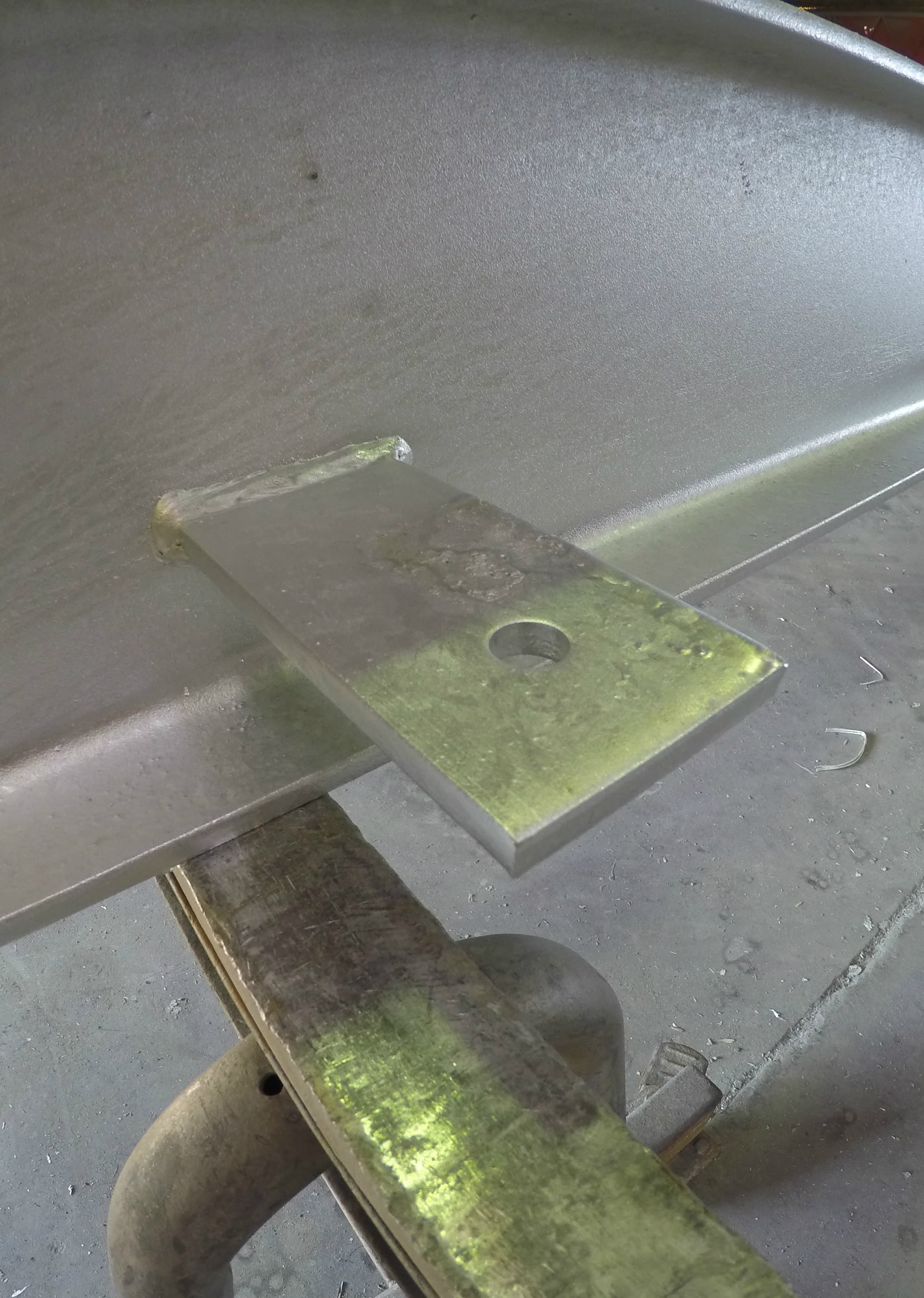
Non-abrasive process avoids rounding edges, orange-peel, and vent damage.
Clear vents and residue to reduce splay, drag, shorts, and cosmetic defects.
CO₂ vaporizes on impact—no slurry, wastewater, or chemical residue.
Dry, non-conductive stream around heaters, thermocouples, and wiring.
Typical cycle 6–10 minutes versus hours of cool-down and teardown.
Cut consumables, disposal, re-polish, and unplanned downtime.
Repeatable, quick cycles simplify scheduling across multi-cavity tools.
This model estimates annual savings from downtime avoided, consumables reduced, and optional labor savings. It also shows annualized equipment cost, payback, and year-one ROI.
Range: 0–10000
Range: 0–24
Range: 0–100000
Range: 0–1000000
Total annual savings
$94,900
Net annual benefit
$87,733
Payback
2.5 months
ROI (Year 1)
475%
Downtime savings (annual)
$85,800
Consumable savings (annual)
$9,100
Labor savings (annual)
$0
Estimates only. For a formal model including utilities, logistics, and shift coverage, book a demo.
Trial on your tool at operating temperature—watch residue lift while polish stays intact.
Quantify avoided teardown time, scrap delta, pellet use, and payback at your press rate.
Run a 6–10 minute clean per change-over and track OEE, defects, and maintenance savings.
“We stopped bead blasting and solvent soaks. Venting is consistent, finishes are stable, and we reclaimed hours every mold change.”

Rachel T.
Manufacturing Engineer, Precision Plastics
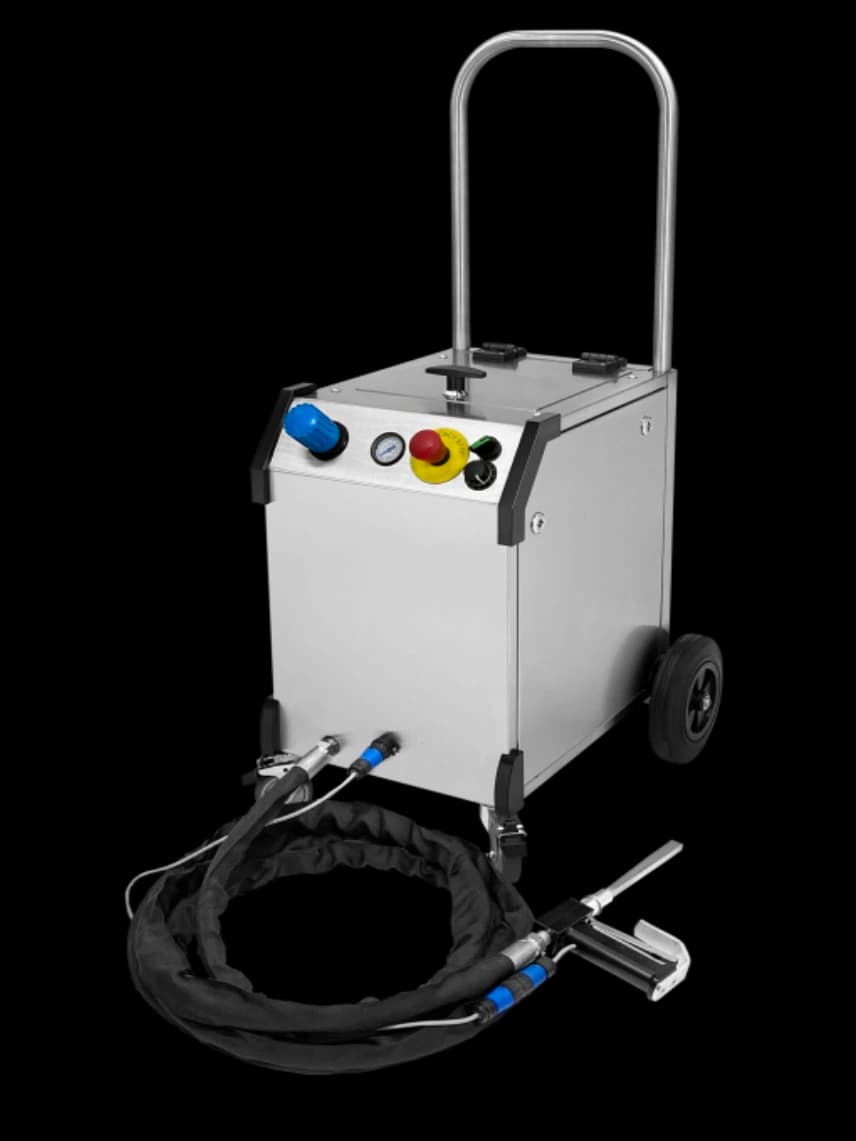
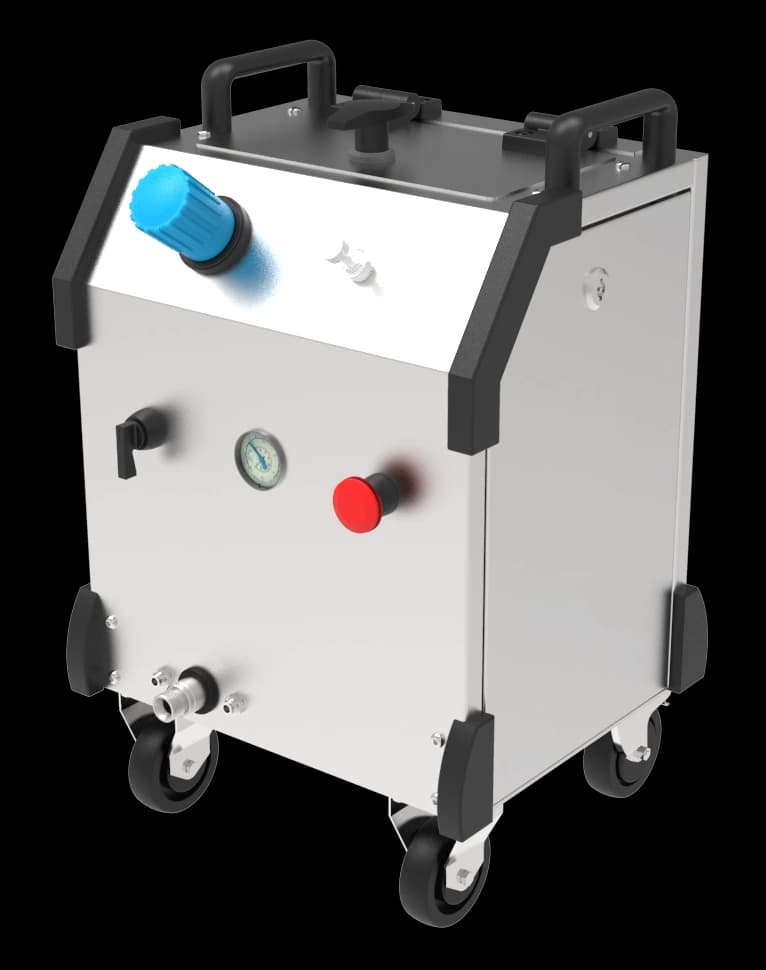
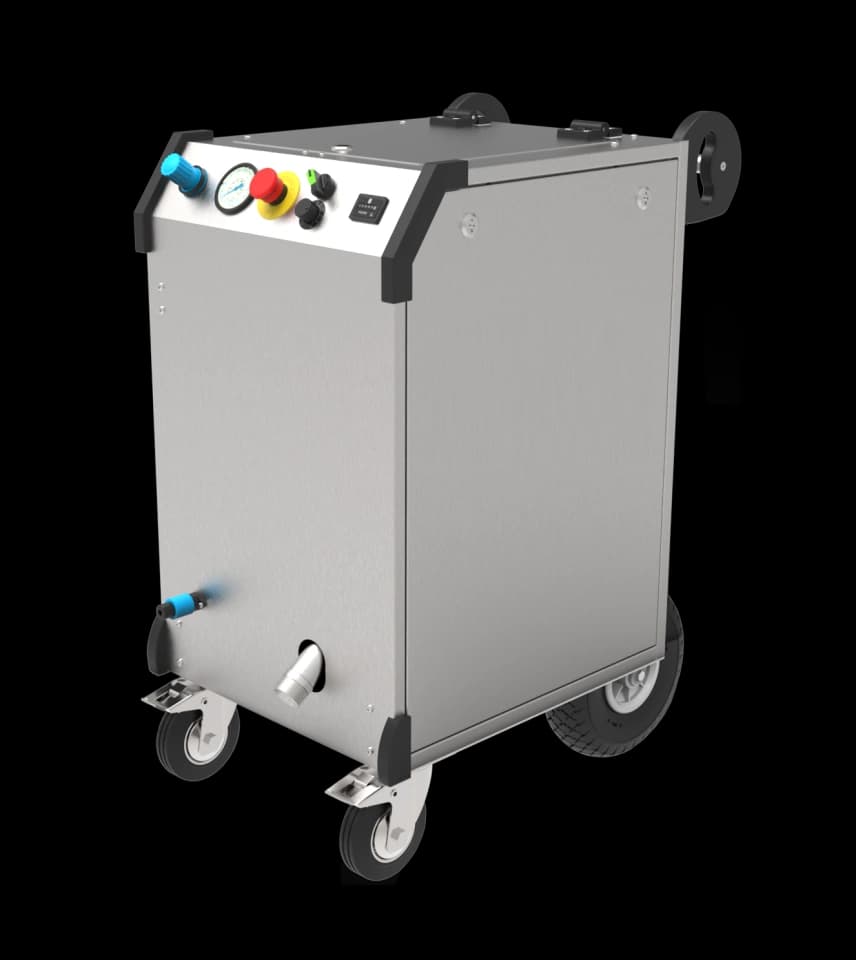
Request a quick, no-obligation quote. We’ll size the right blaster/nozzles for your tools, estimate pellet usage, and outline payback per press.