
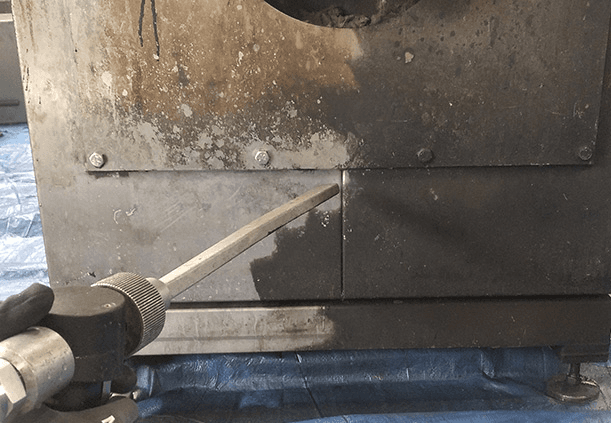
How It Works · CO2 blasting process
How Dry Ice Blasting Works
Dry ice blasting combines three synergistic phenomena to lift contaminants from surfaces without abrasion. Explore each mechanism below and learn how to set up your PureBlast blaster for optimal cleaning performance.
The 3 Mechanisms of Dry Ice Blasting
Pellet Kinetic Energy
Dry ice pellets are accelerated through specially designed nozzles at supersonic speeds. When they strike the substrate, their mass and velocity provide the primary cleaning energy without the hardness of sand or grit. Because solid CO2 is relatively soft (1.5-2 on the Mohs scale), the impact does not damage paint, metals or delicate electronics.
This kinetic effect is most significant when substrates are at ambient temperature, dislodging loose debris and preparing surfaces for the deeper effects that follow.
Thermal Shock Effect
The extreme cold of dry ice (-109 F / -78.9 C) induces thermodynamic shock in contaminants. As the pellets make contact, they embrittle and shrink layers of residue. The resulting temperature differential creates micro-cracks and shear stresses that break the bond between the contaminant and the underlying surface.
Meanwhile, the latent heat of sublimation absorbs heat from the top layer of the contaminant, enhancing the cracking effect and helping lift particles away.
Thermal-Kinetic (Micro-Explosion) Effect
Upon impact, the solid CO2 pellets instantly convert to gas, expanding up to 800x their original volume. This rapid phase change creates a micro-explosion at the surface, pushing fractured contaminants away without abrasion. Because the gas expansion is uniform and has no rebound energy, it distributes force evenly along the substrate.
The combination of impact, cold shock and expansion lifts debris cleanly from the surface, leaving equipment dry, clean and residue-free.
Setting Up a PureBlast Blaster
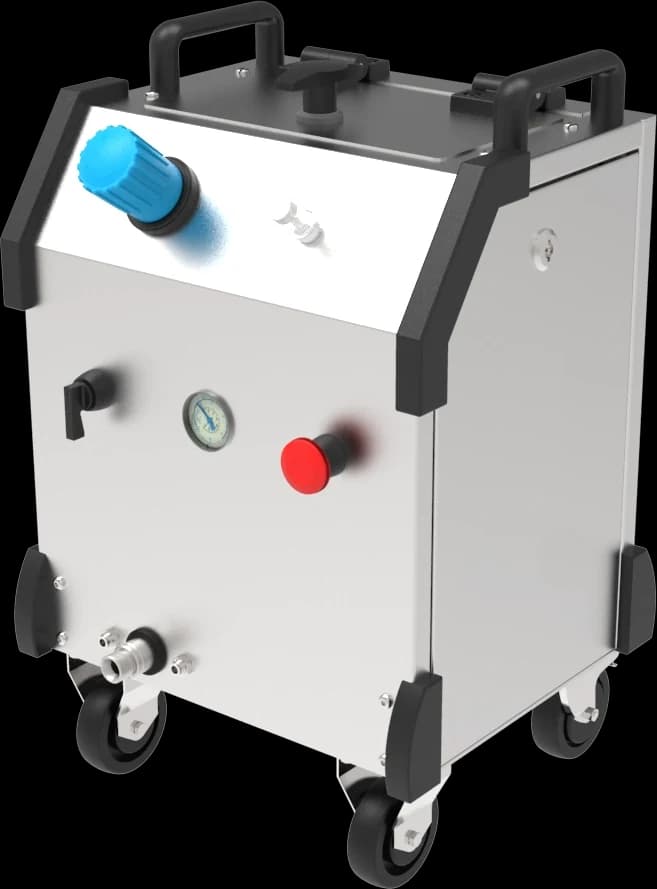
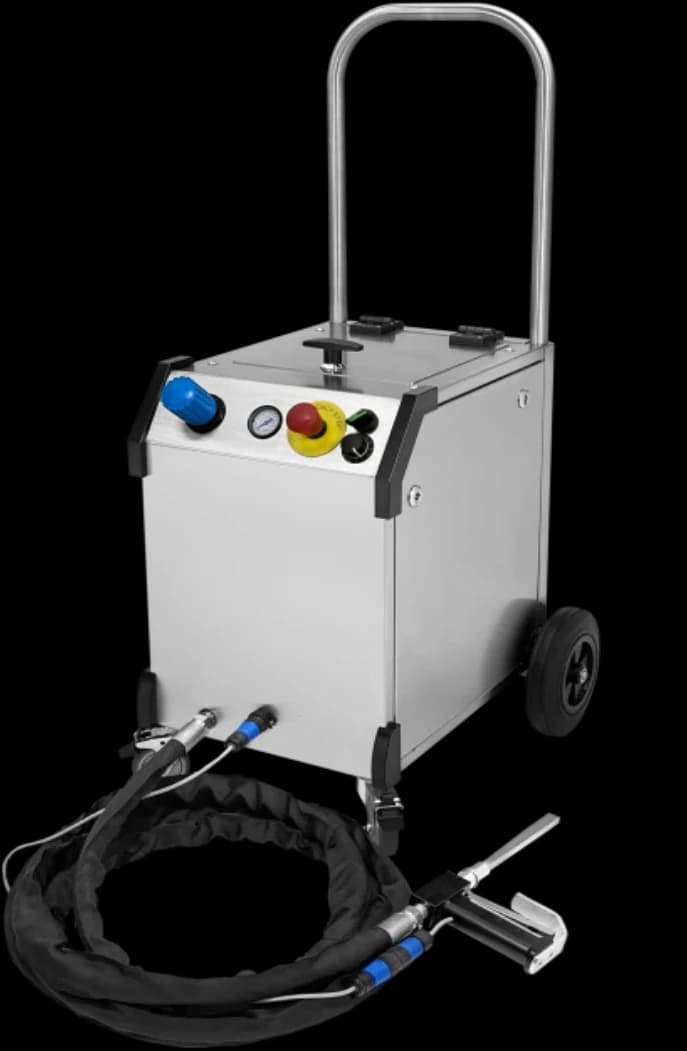
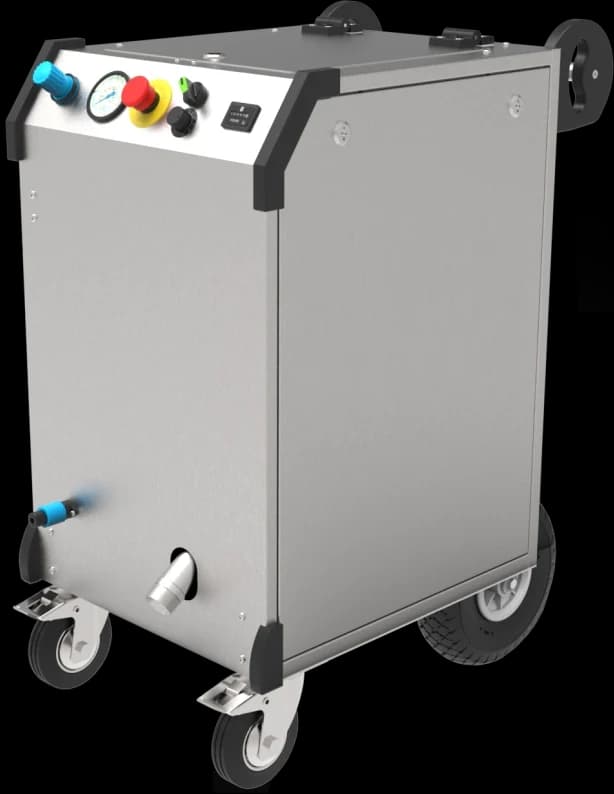
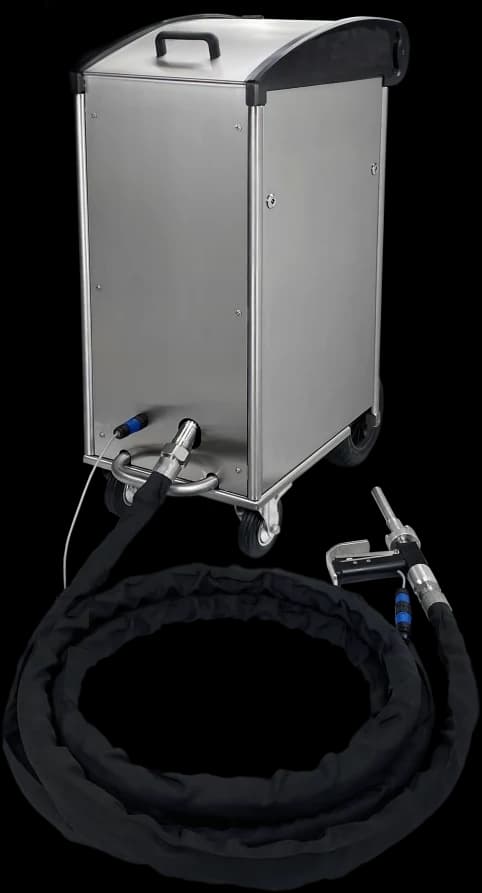
Operating a PureBlast machine is straightforward. First, ensure compressed air and power connections are secure. Fill the hopper with dry ice pellets. Our PureBLAST 2500 and PureBLAST 3000 models hold over 25 kg (55 lb), providing roughly 30 minutes of runtime before refilling.
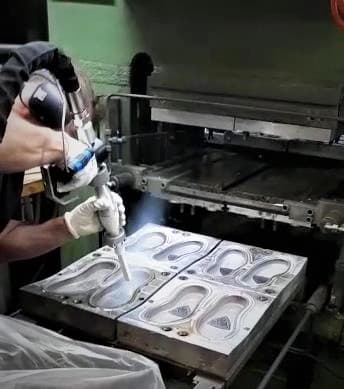
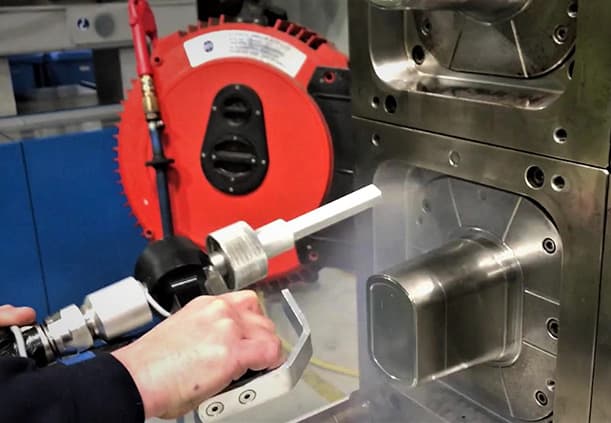
Adjust blast pressure and pellet feed rate using the protected controls mounted behind the machine's handles. Direct the nozzle at the target surface, maintaining a steady distance for even cleaning. For sensitive components, start with lower pressures and adjust as needed. Always wear appropriate personal protective equipment when blasting.
When cleaning is complete, simply turn off the machine; any dry ice left inside will safely sublimate. There is no messy media to sweep up, so equipment can be returned to service immediately.
Operational Efficiency & ROI
Dry ice blasting isn't just an effective cleaning method; it's a smart investment. Because the process is significantly faster than abrasive or chemical alternatives, equipment can be cleaned while hot and online. This reduces shutdown time and allows more production cycles from existing machinery. A cleaner production environment also leads to higher product quality and fewer scrap parts, directly impacting your bottom line.
The non-abrasive nature of dry ice pellets means surfaces aren't worn down during cleaning. This extends the life of molds, tools and equipment, spreading your capital investment across more operating hours. When combined with reduced labor and disposal costs, these factors deliver a compelling return on investment for PureBlast owners.
Safety & Training
Dry ice cleaning is non-toxic and non-conductive, but CO2 safety should always be respected. Ensure adequate ventilation when blasting in enclosed spaces and wear appropriate personal protective equipment. PureBlast systems are designed with simple controls and safety features. However, operator training maximizes efficiency and ensures consistent results.
We offer comprehensive training options to help your team become proficient with dry ice technology. From basic operation to application-specific techniques, our experts will walk you through best practices so you can confidently integrate PureBlast into your workflow.