
Buying Guide9 min read
Best Dry Ice Blaster for 2026
On this page
60-second answer
Quick pick by application
On-press touch-ups / electronics
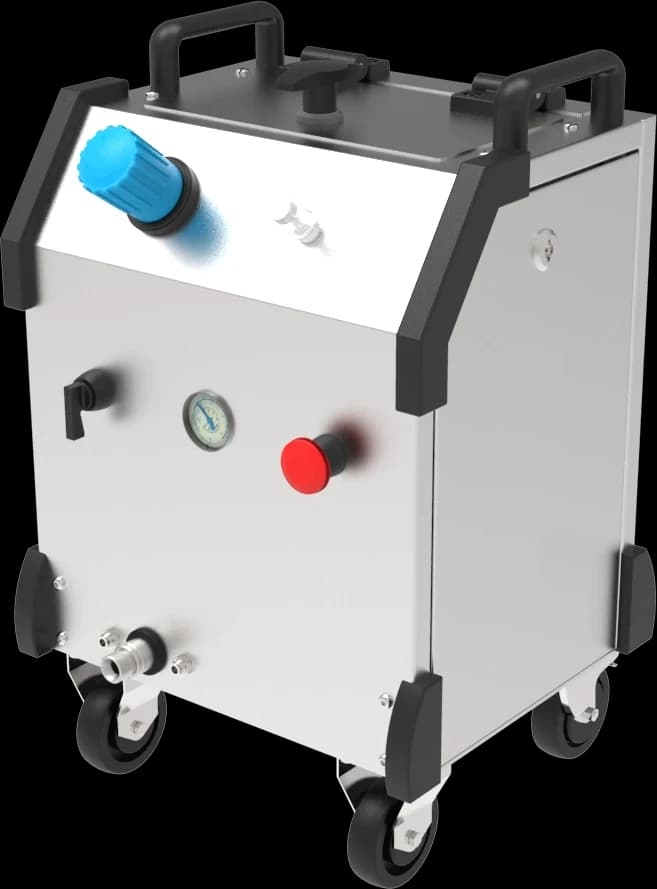
PureBLAST Nano: air-only, 42–127 CFM, 6.6 lb hopper.
Daily maintenance / small shop
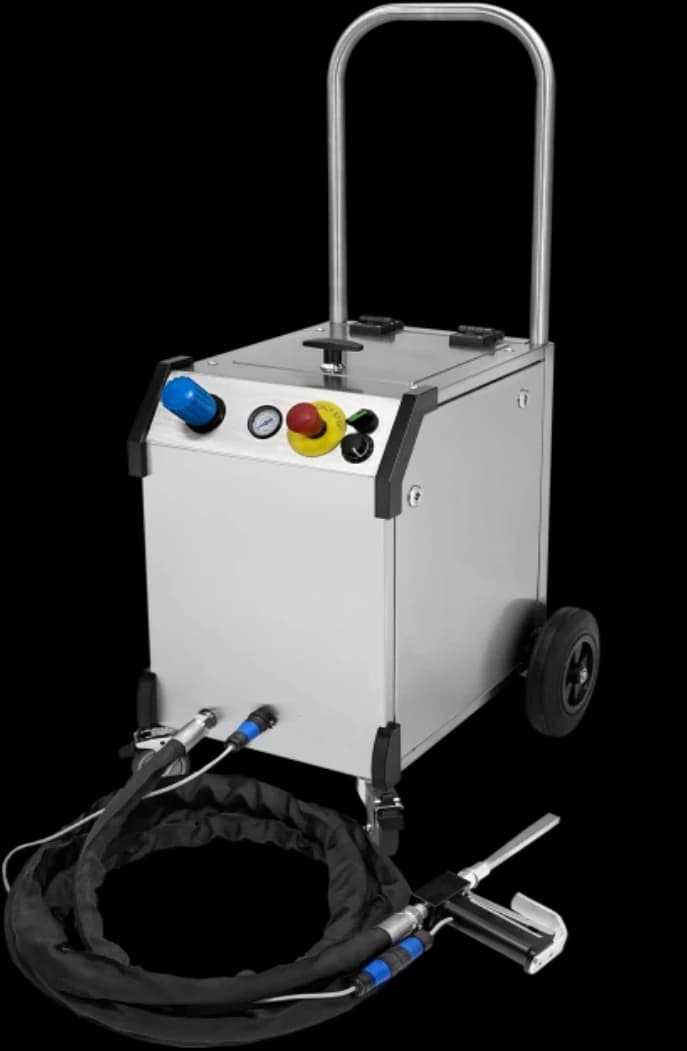
PureBLAST Mini: 35–127 CFM, 17.6 lb hopper, ~75 dBA.
Heavy industrial / adhesives
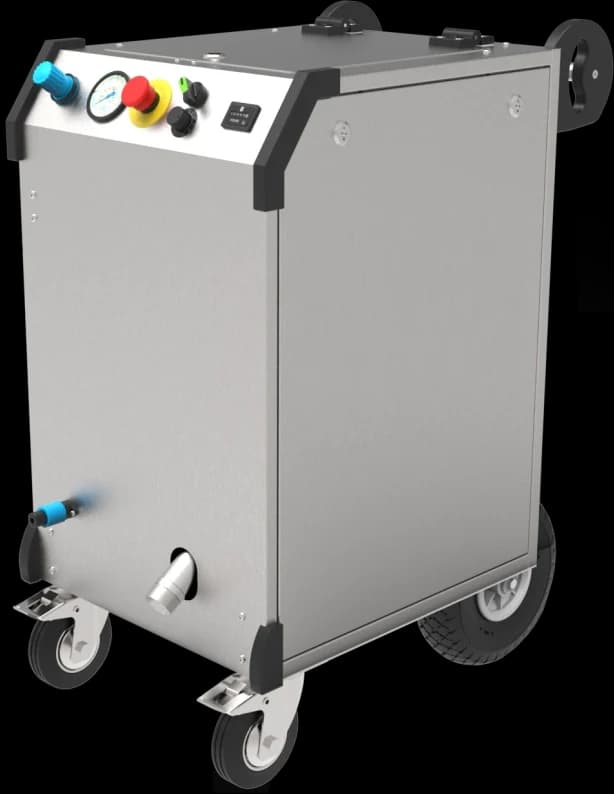
PureBLAST 2500: 71–530 CFM, 50.7 lb hopper.
Continuous production / 24/7 lines
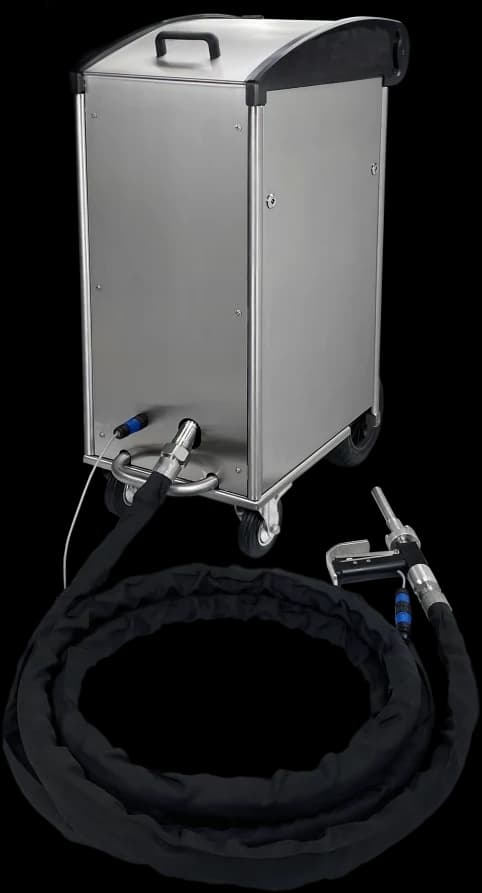
PureBLAST 3000: 71–883 CFM, 55.1 lb hopper, 29–232 psi.
What actually makes a dry ice blaster "best"?
Five spec lines decide whether a machine fits your plant. Every PureBLAST model publishes these: always compare them head-to-head, ignore marketing adjectives.
- Plant air demand (CFM). Your compressor sets the ceiling. The Nano runs at 42–127 CFM; the 3000 peaks at 883 CFM. If your plant air is limited, the Nano or Mini are the only realistic options.
- Operating pressure (psi). Higher pressure = more aggressive cleaning on baked-on adhesives. The Nano tops out at 145 psi; the 3000 reaches 232 psi. Match pressure to the soil, not the machine badge.
- Dry ice throughput (lb/hr). Nano/Mini blow through 22–66 lb/hr. The 2500/3000 blow 55–198 lb/hr, roughly 3× the ice consumption but proportional coverage.
- Hopper capacity (lb). Determines how often you refill. 6.6 lb on the Nano = ~10 min of blasting. 55 lb on the 3000 = 30+ min between refills. For multi-hour jobs, a bigger hopper is not optional.
- Acoustic + ergonomics. The Mini is spec'd at ~75 dBA, quiet enough to run near operators without mandatory hearing PPE. The 3000 is louder but fits a 15.75" chassis so it slips between machines most competitors can't reach.
PureBLAST 2026 lineup: specs at a glance
Swipe the table sideways to see every column.
| Spec | Nano | Mini | 2500 | 3000 |
|---|---|---|---|---|
| Best for | Precision / touch-up | Daily maintenance | Heavy industrial | Continuous prod. |
| Pressure | 29–145 psi | 29–174 psi | 29–174 psi | 29–232 psi |
| Dry ice use | 22–66 lb/hr | 22–66 lb/hr | 55–198 lb/hr | 55–198 lb/hr |
| Hopper | 6.6 lb | 17.6 lb | 50.7 lb | 55.1 lb |
| Air (CFM min/ideal/max) | 42 / 92 / 127 | 35 / 71 / 127 | 71 / 177 / 530 | 71 / 177 / 883 |
| Power | Air-only | Air + elec. vibrator | Air + elec. vibrator | Air + elec. vibrator |
| Weight | 42 lb | 86 lb | 178.6 lb | 196 lb |
| Footprint (W×D×H) | 13.8 × 13.8 × 18.5 in | 18.9 × 21.7 × 24–35.2 in | 19.7 × 27.6 × 35.4 in | 15.75 × 30.7 × 43.7 in |
Full technical specs and included nozzles are on each product page: Nano, Mini, 2500, 3000.
Best for precision touch-ups: PureBLAST Nano
The PureBLAST Nano is the entry point. It runs entirely on compressed air (no electrical hookup, no vibrator) and works with common plant CFM (42–127 CFM). The 6.6 lb hopper holds about 10 minutes of pellets, so it's explicitly designed for fast touch-ups between cycles, not multi-hour jobs.
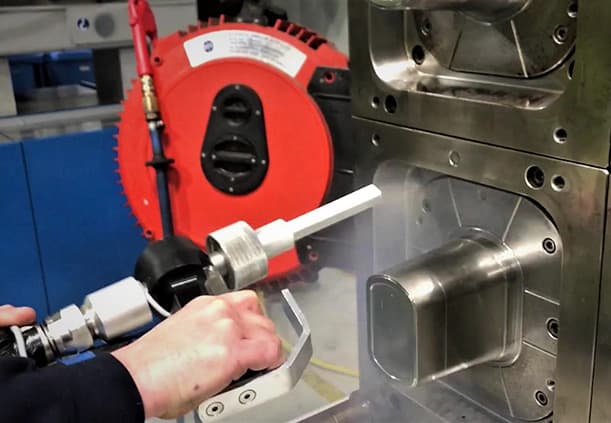
Its killer feature is the footprint: 13.8 × 13.8 × 18.5 in, 42 lb. You can carry it into an enclosure, clean, and carry it back out. For electronics and tight machine cells where bigger units won't physically fit, the Nano wins by default.
Pick it when: your team needs mobility > throughput, you have limited plant air, and your blast jobs are under ~10 minutes at a time.
Best for daily maintenance: PureBLAST Mini
The PureBLAST Mini is the workhorse model for small shops and electronics-heavy environments. At ~75 dBA it's quiet enough to run close to operators, and the 17.6 lb hopper supports longer intervals between refills than the Nano. Air demand is comparable (35–127 CFM) but the electrical vibrator guarantees consistent pellet feed even on long runs.
It also costs less to run than the 2500/3000 per square foot cleaned: throughput per pound of dry ice is roughly equivalent on light-to-moderate soils.
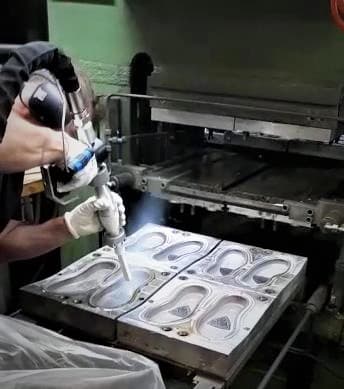
Pick it when: you need multi-shift capability, your typical job is a delicate surface (panels, cabinets, molds), and noise discipline matters.
Best for heavy industrial cleaning: PureBLAST 2500
When the soil is baked-on adhesive, release agent, or thick grease, throughput matters more than quiet operation. The PureBLAST 2500 runs 55–198 lb/hr of dry ice at up to 174 psi, roughly triple the throughput of the Nano/Mini. The 50.7 lb hopper supports longer cycles, and the unit accepts the Long 600–700 mm nozzle for maximum velocity.
Plant air demand steps up too: 71 CFM min, 177 CFM ideal, 530 CFM max. Most industrial shops already have that air available.
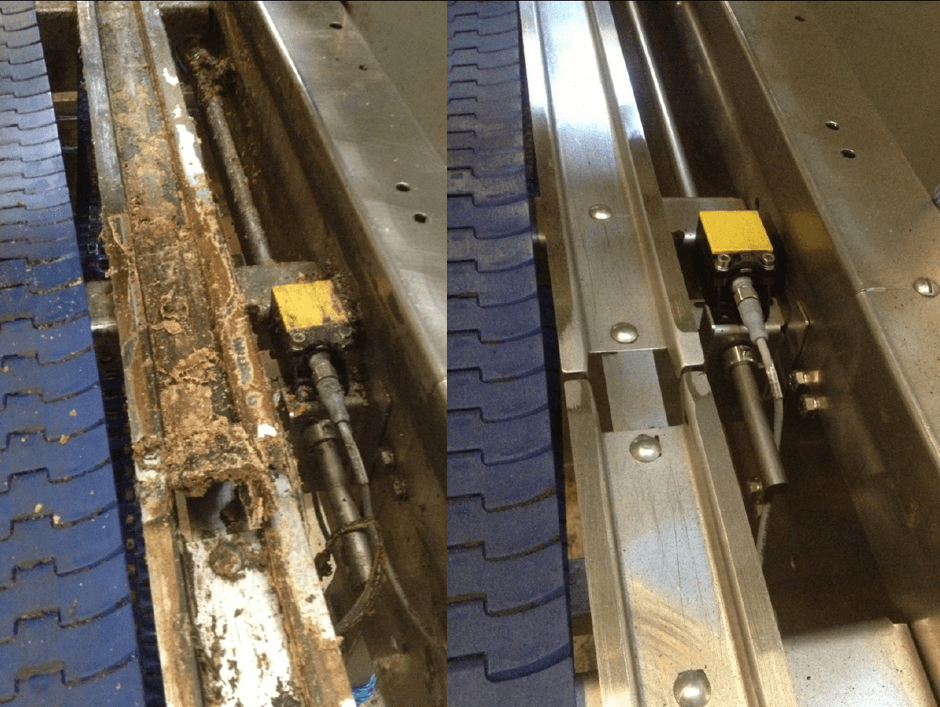
Pick it when: you're stripping adhesives or production release agents, or cleaning tooling where speed-to-clean beats low decibel count.
Best for continuous production: PureBLAST 3000
The PureBLAST 3000 is the top of the lineup. Pressure envelope reaches 232 psi. Air max is 883 CFM. The narrow 15.75 in chassis is the single most underrated spec: it slips between machines that won't accommodate the wider 2500.
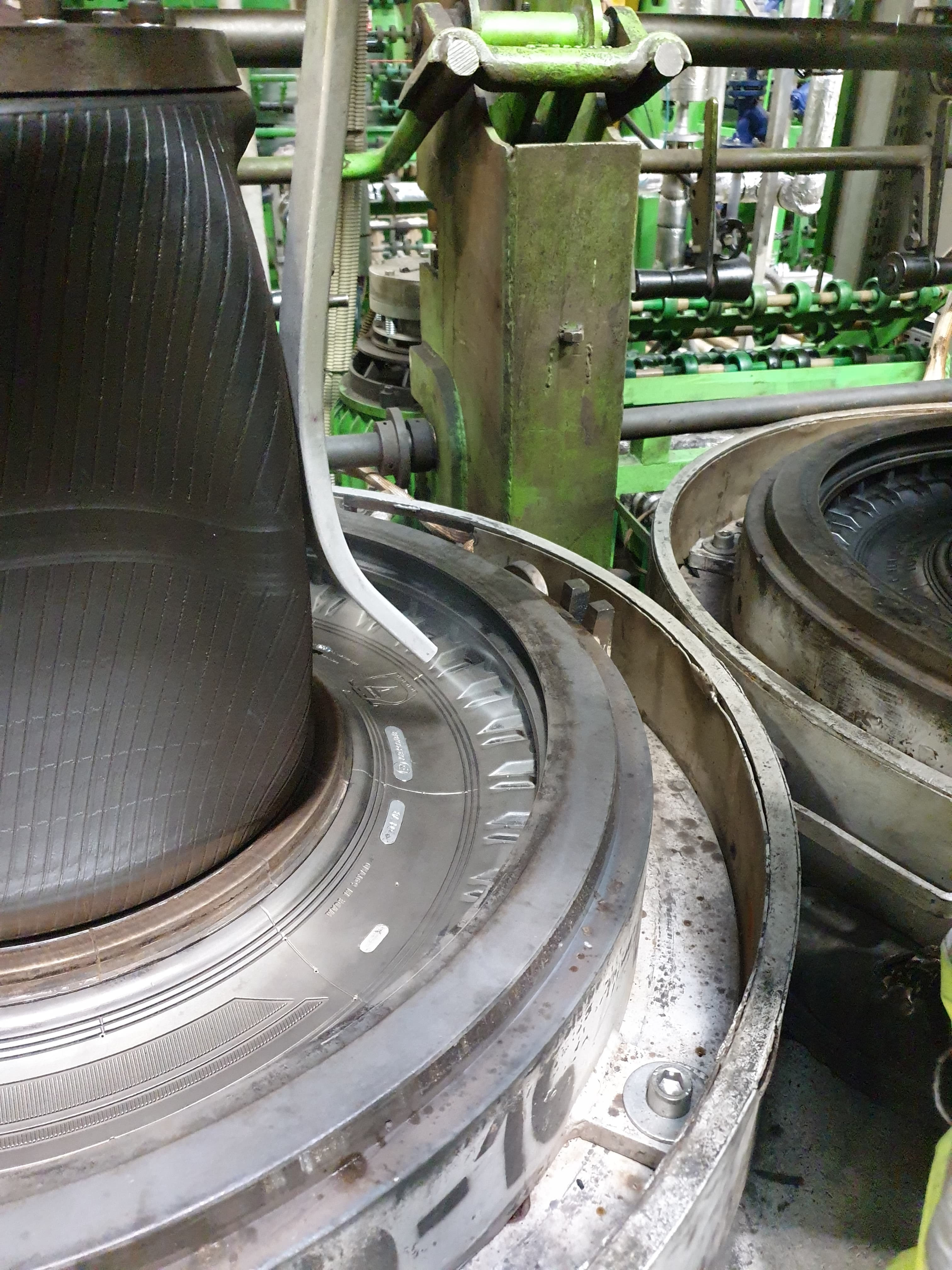
For 24/7 operations (welding cells, continuous injection molding, tire mold cleaning), the 3000 is the machine that keeps up. It pairs with threaded inserts (5–10 mm) to tune jet pattern for the application.
Pick it when: your production line runs continuously, you need the highest pressure available, or your physical aisle width rules out the 2500.
How to choose in 3 questions
- What's my max plant air CFM at the hose? Below 130 CFM: Nano or Mini. 150–500 CFM: 2500. 500+ CFM: 3000.
- What's my typical soil? Light residue and release agents: Nano/Mini. Baked-on adhesives, shop grease: 2500. Heavy coatings, continuous-production contamination: 3000.
- How long is a typical blast job? Under 10 min: Nano hopper is fine. 10–30 min: Mini. 30+ min continuous: 2500 or 3000.