
Comparison8 min read
PureBLAST 2500 vs 3000
Specs at a glance
Spec comparison
Swipe the table sideways to see every column.
| Spec | PureBLAST 2500 | PureBLAST 3000 |
|---|---|---|
| Operating pressure | 29–174 psi | 29–232 psi |
| Dry ice throughput | 55–198 lb/hr | 55–198 lb/hr |
| Hopper capacity | 50.7 lb | 55.1 lb |
| Air demand (min/ideal/max) | 71 / 177 / 530 CFM | 71 / 177 / 883 CFM |
| Pressure regulator | Festo 3/4 in | Festo 1 in |
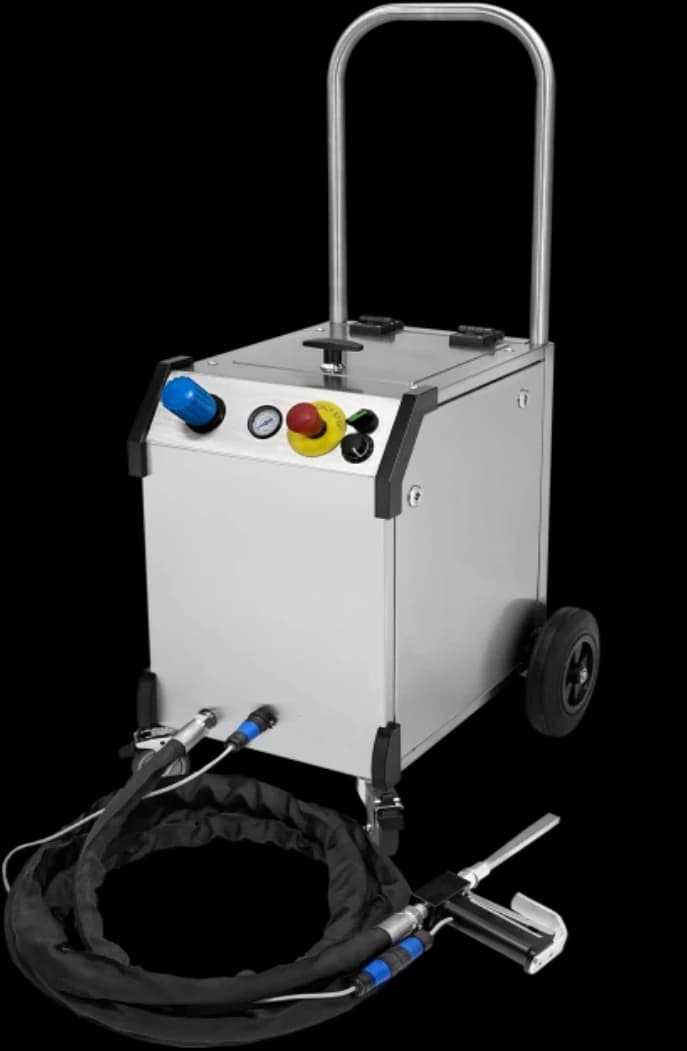
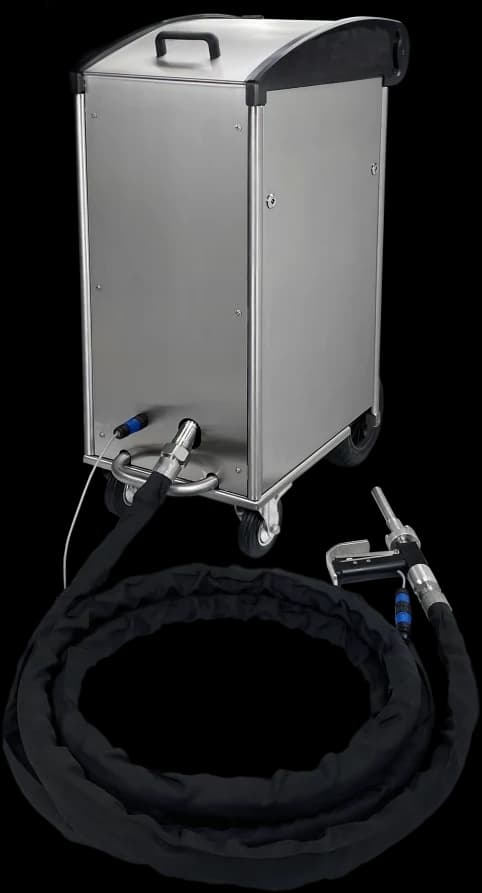
| Hose | 23 ft × 3/4 in technical rubber | 23 ft × 3/4 in technical rubber |
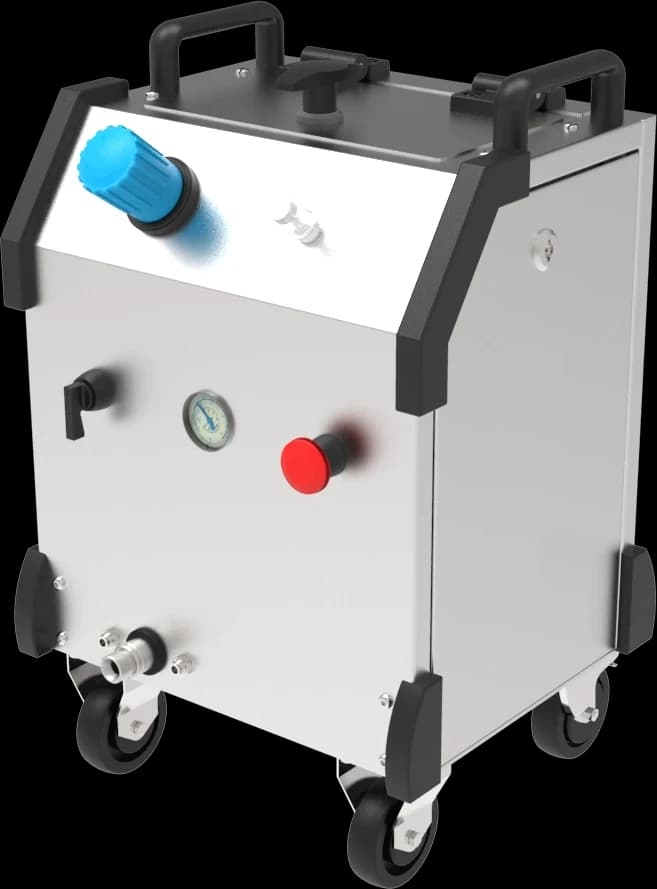
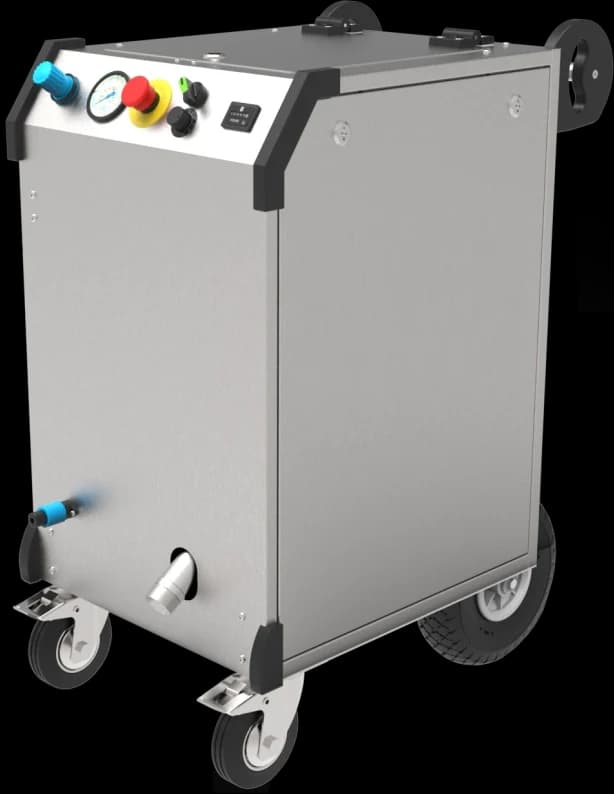
| Footprint (W×D×H) | 19.7 × 27.6 × 35.4 in | 15.75 × 30.7 × 43.7 in |
| Weight | 178.6 lb | 196 lb |
| Nozzle interface | 4 mm threaded standard | Short nozzle + 5–10 mm threaded inserts |
When the PureBLAST 2500 is enough
The 2500 is the right answer for most industrial dry ice blasting. Its 174 psi ceiling handles adhesives, baked-on release agents, and heavy shop soils. The 50.7 lb hopper supports long runs between refills, and 530 CFM peak air demand is comfortably within reach of typical industrial compressors.
Pick it when:
- Your typical job is adhesive removal, release agent, or baked grease.
- Your plant air comfortably delivers ~177 CFM at the connection.
- You don't need to fit between machines spaced under ~20 inches apart.
- Your pressure needs cap around 174 psi; most molds, fixtures, and shop equipment do.
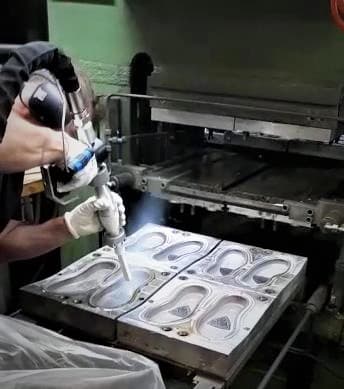
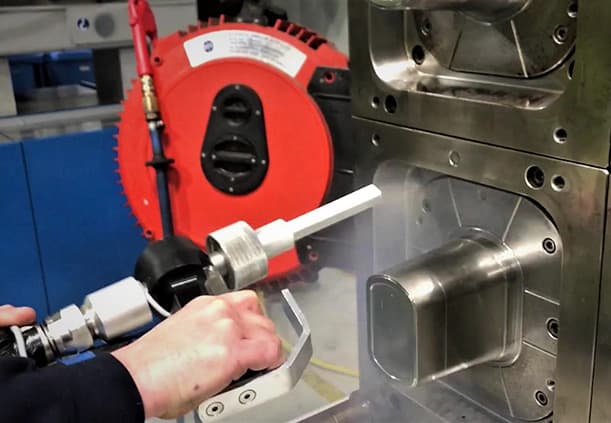
Typical buyers: small-to-mid manufacturing facilities; mold and tooling shops; galvanizing and transport maintenance teams.
When you need the PureBLAST 3000
The 3000 steps up on three dimensions: pressure (up to 232 psi), peak air (up to 883 CFM), and chassis width (15.75 in vs the 2500's 19.7 in). That last one is often the deciding spec.
Pick the 3000 when:
- Continuous production. 24/7 lines need a machine that doesn't become the bottleneck on cleaning days.
- Tight aisles. 4 inches narrower than the 2500.
- Heaviest deposits. The extra 60 psi makes a real difference on thick coatings.
- Plant air to spare. If your compressor delivers 500+ CFM, the 3000's headroom matters; on a marginal compressor it'll throttle.
- Threaded inserts. The 3000's short nozzle + 5–10 mm threaded inserts let you tune the jet profile to the application without swapping the whole nozzle.
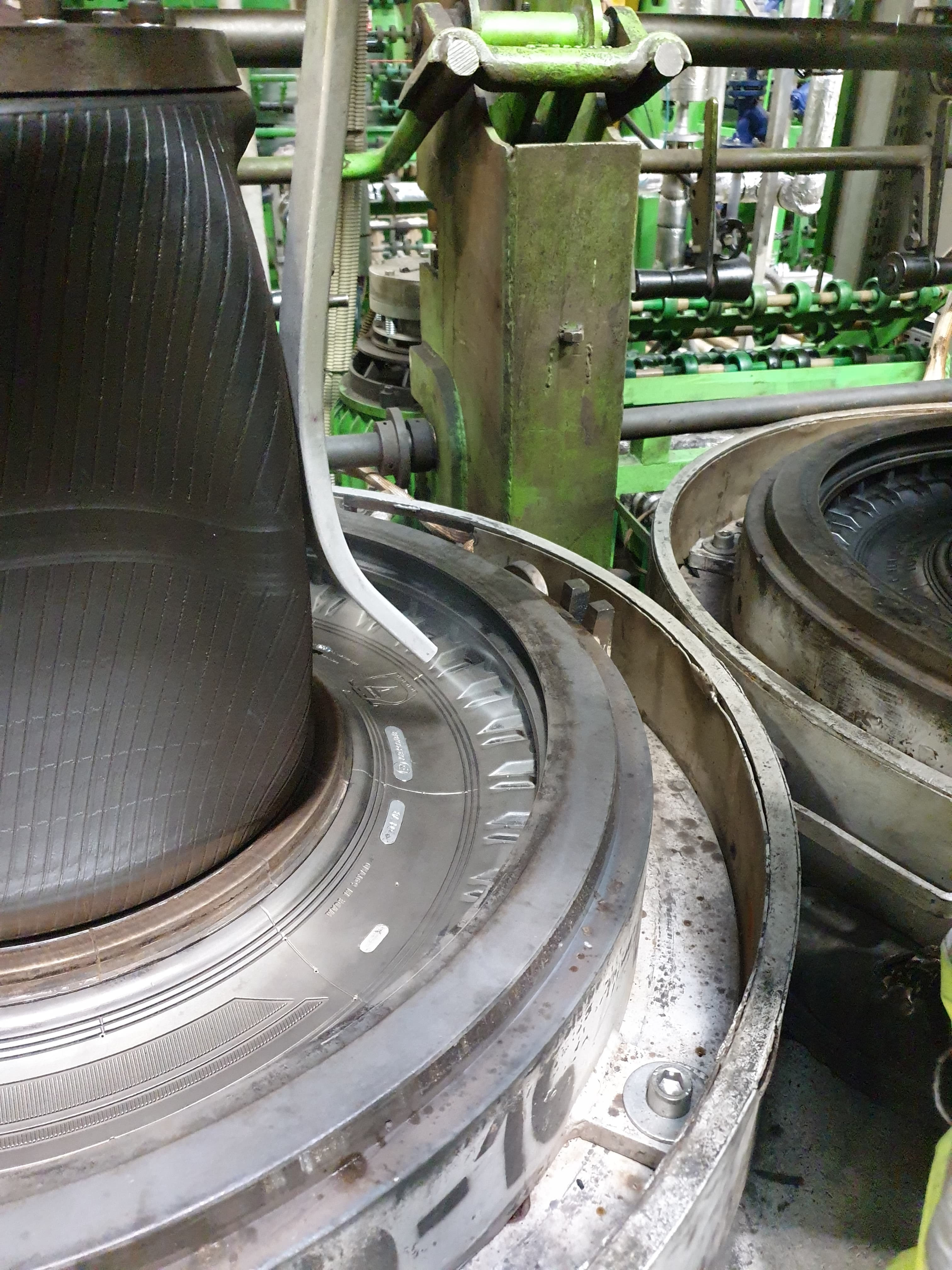
Typical buyers: continuous-production manufacturers, welding cells, large tire mold shops, and injection molding plants with high-cavity tooling.
Compressor reality check
Both machines start at 71 CFM minimum and 177 CFM ideal; they're not radically different at the low end. The split happens at the top:
- 2500 max: 530 CFM at 174 psi.
- 3000 max: 883 CFM at 232 psi.
If your compressor caps at 400–500 CFM, the 3000's extra envelope is wasted; you'd be throttled to 2500-class performance. If you're consistently saturating the 2500 because your compressor is huge and you keep wanting more output, that's when stepping up to the 3000 buys you something.
Worth running this past us during a consultation before ordering.